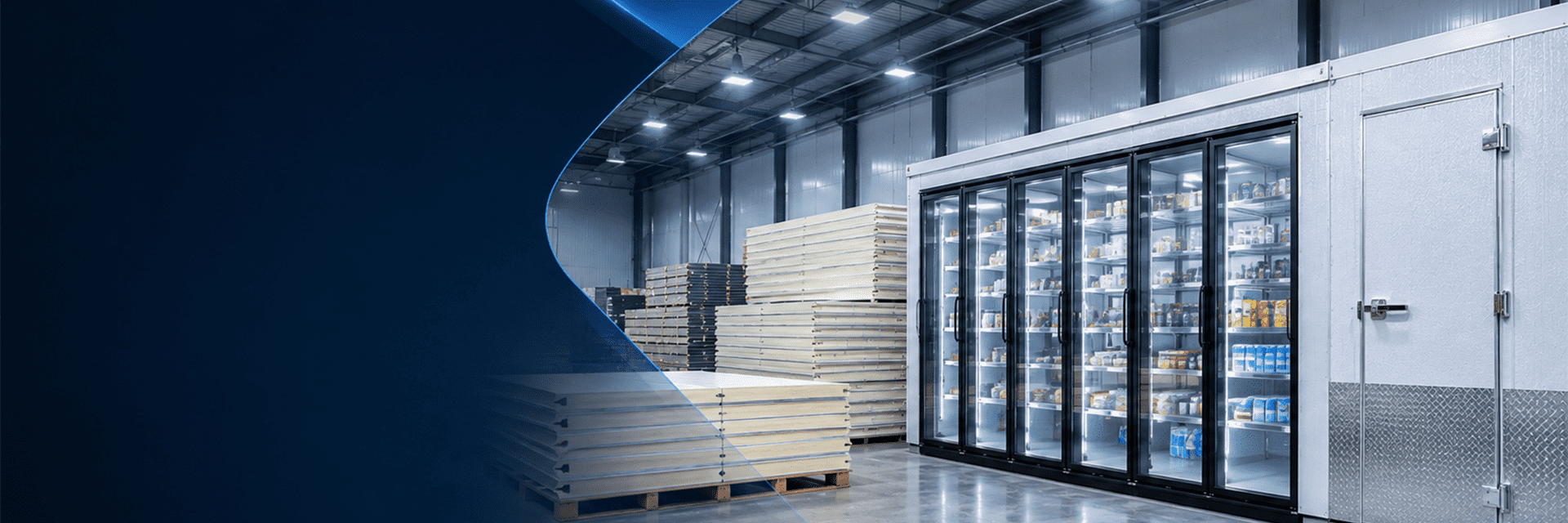
How to Choose a Walk-In Cooler: 5 Common Mistakes to Avoid
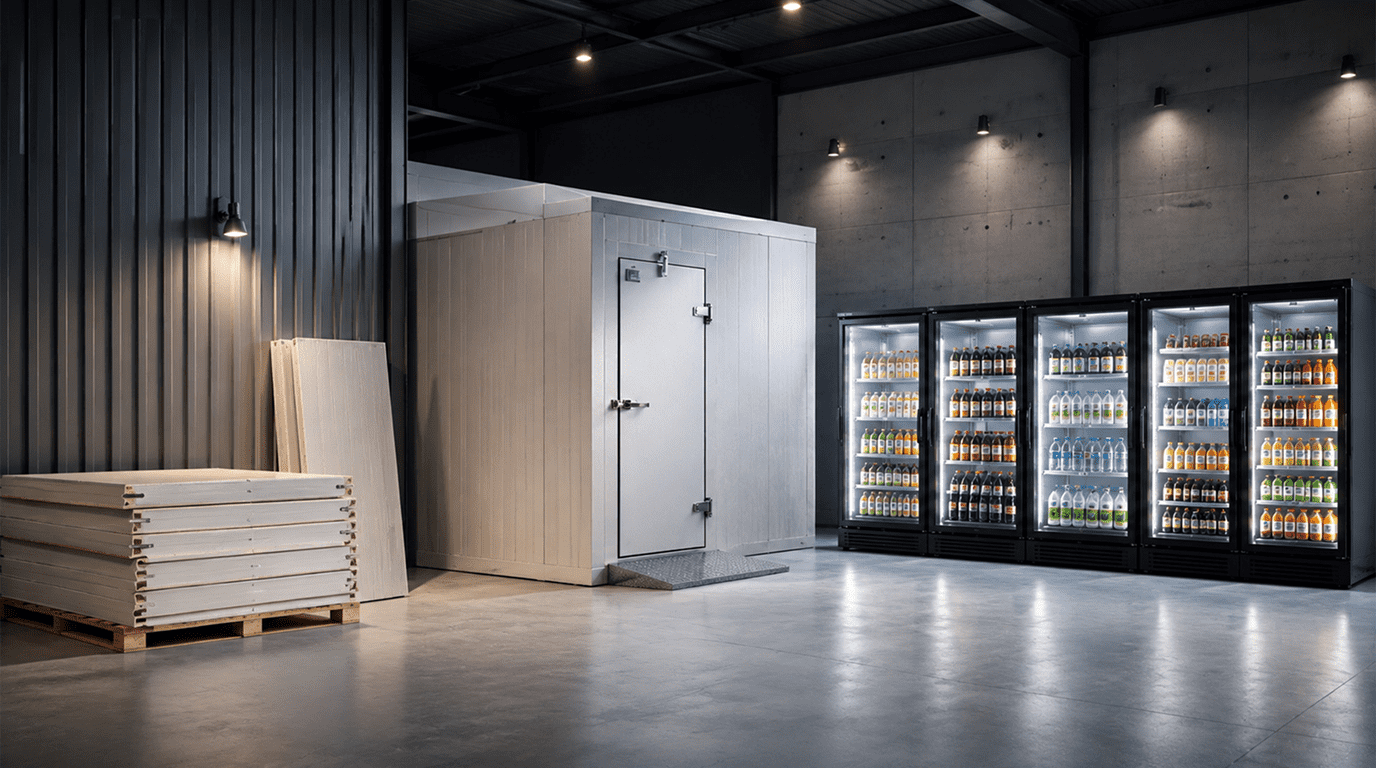
The problem is that a walk-in cooler is more than an insulated room with a refrigeration unit attached to it.
The size of the cooler, insulation, door design, refrigeration capacity, product load, installation location, and even how often employees open the door can affect its performance. Get one of these details wrong, and you may end up paying more for electricity, dealing with inconsistent temperatures, or replacing equipment sooner than expected.
For restaurants, grocery stores, convenience stores, food distributors, hotels, and other businesses, refrigeration problems can become business problems very quickly. Food inventory has value, and temperature control is directly connected to product quality and food safety.
The FDA Food Code generally requires many temperature-controlled foods to be held at 41°F (5°C) or below, making dependable refrigeration an important part of daily food operations.
Before you choose your next walk-in cooler, here are five mistakes worth avoiding.
Buying a Cooler Based Only on Available Space
One of the first mistakes businesses make is starting with the question, "What size cooler can we fit here?"
That's certainly important, but it shouldn't be the only question.
The better question is: How much refrigerated storage do we actually need?
A walk-in cooler that is too small can become frustrating almost immediately. Shelves get crowded, boxes end up stacked in places they shouldn't be, employees have difficulty finding products, and air may not circulate properly around stored items.
But going too large isn't necessarily the answer either.
A larger cooler typically means more insulated surface area, more space to cool, and a potentially higher upfront investment. If you only use half of the available storage, you're paying for capacity your business doesn't really need.
Think about how your operation works on a busy week not just on an average Tuesday.
Ask yourself:
- How much product arrives with each delivery?
- How many deliveries do you receive each week?
- How much inventory needs to be kept cold?
- Do you experience seasonal increases in demand?
- How much room is needed for shelving?
- Do employees need to walk inside the cooler?
- Is the business expected to grow over the next few years?
For example, a restaurant that receives a large produce and meat delivery twice a week may need considerably more cooler space than a small café that receives fresh products every day.
There's also an important difference between total cooler volume and usable storage space. Evaporators, shelving, doors, racks, and required clearances all take up room.
The better approach: Don't measure the empty space and stop there. Map out how the cooler will actually be used. A refrigeration professional can then help you determine the right dimensions and cooling capacity for the application.
Choosing the Cheapest Option Instead of Looking at Long-Term Cost
Everyone has a budget. That's normal.
The mistake is assuming the cheapest walk-in cooler is automatically the best deal.
The purchase price is only one part of what a refrigeration system costs. A cooler may operate for many years, which means energy consumption, maintenance, repairs, and replacement parts can eventually become much more significant than the original price difference.
Commercial refrigeration equipment can run for long periods, and poorly selected or inefficient equipment can add unnecessary operating costs month after month.
Energy efficiency is worth paying attention to. According to ENERGY STAR, certified commercial refrigerators and freezers can use significantly less energy than standard models, with savings depending on the specific equipment and configuration.
Walk-in coolers have their own design considerations, but the principle is the same: look at what the equipment will cost to own, not just what it costs to buy.
When comparing two systems, consider:
- Insulation quality
- Refrigeration efficiency
- Compressor performance
- Condenser and evaporator efficiency
- Door sealing
- Lighting
- Temperature controls
- Maintenance requirements
- Warranty coverage
- Availability of service and replacement parts
A cooler that costs a little more initially may make better financial sense if it delivers reliable temperature control and lower operating costs over its service life.
There's another cost people sometimes overlook: lost inventory.
If a refrigeration problem causes hundreds or thousands of dollars of food to spoil, the savings from buying a cheaper system can disappear very quickly.
The better approach: Ask your supplier about total cost of ownership. Don't compare equipment based on the quote alone.
Underestimating the Importance of the Door
It is easy to spend most of your time comparing refrigeration systems and forget about something employees use all day long the door.
In a busy restaurant or grocery store, the walk-in cooler door may be opened repeatedly throughout the day. Every opening allows warmer air into the refrigerated space.
That's normal. The problem starts when the door doesn't close properly or isn't designed for the way the business operates.
A damaged gasket, worn hinge, poor door closer, or door that's frequently left open can make the refrigeration system work harder.
Think about what happens during a busy dinner service. An employee opens the cooler, grabs ingredients, another employee opens it a few minutes later, and someone else leaves it open while unloading a delivery.
Now multiply that activity by hundreds of door openings over time.
That's why door construction and hardware deserve more attention than they usually receive.
Depending on the application, features such as self-closing doors, durable gaskets, strip curtains, proper thresholds, and interior safety hardware can make a meaningful difference.
The door also needs to be the right size for the operation. A distribution facility moving large pallets has very different requirements from a restaurant moving cases of vegetables and dairy products.
The better approach: Tell your cooler supplier how the door will actually be used. Don't simply choose a standard door because it happens to fit the opening.
Getting the Refrigeration Capacity Wrong
This is one of the mistakes that can become expensive after installation.
A walk-in cooler might have the correct dimensions and still struggle to maintain temperature if the refrigeration system isn't properly matched to the application.
Why?
Because cooling a walk-in isn't just about cooling the air inside the room.
The system may also need to deal with warm products being loaded into the cooler, frequent door openings, heat from lighting, people entering the room, outdoor temperatures, and the location of the refrigeration equipment.
Imagine a restaurant receiving a large delivery in the afternoon. Boxes of food that aren't already properly chilled are moved into the walk-in. At the same time, employees are opening the door repeatedly while preparing for dinner service.
That's a much different situation from a cooler that stays closed for most of the day with already-refrigerated products inside.
The installation environment matters, too.
A walk-in cooler located next to a hot commercial kitchen can experience a very different heat load than one installed inside a temperature-controlled warehouse.
This is why simply saying, "I need a 10-by-12 cooler," isn't enough to determine the refrigeration system.
The required cooling capacity can depend on:
- Cooler dimensions
- Desired storage temperature
- Product entering temperature
- Amount of product loaded
- Ambient temperature
- Door traffic
- Lighting
- Number of people entering the cooler
- Condenser location
- Expected operating schedule
There's also an important food-safety consideration when businesses expect a cooler to handle hot-food cooling.
The FDA Food Code generally requires cooked time/temperature control for safety food to cool from 135°F to 70°F within two hours and from 135°F to 41°F or below within a total of six hours.
A regular storage walk-in isn't automatically a substitute for equipment designed for rapid cooling.
The better approach: Have the refrigeration load calculated based on how the cooler will actually be used. Good sizing isn't about installing the biggest system possible; it's about installing the right system for the heat load.
Forgetting About Maintenance and Future Growth
A walk-in cooler may be a major purchase today, but it needs to work for your business for years.
That's why it's worth thinking beyond installation day.
Maybe your restaurant currently needs 500 square feet of refrigerated storage, but you're planning to add catering services. Maybe your grocery store expects to add more fresh products. Maybe your distribution business is growing and delivery volumes are increasing.
You don't necessarily need to buy a massive cooler just because the business might grow. However, ignoring future requirements altogether can leave you with an expensive problem later.
Before making a decision, think about where your business could be in three to five years.
Will you need:
- More shelving?
- More storage capacity?
- Additional product categories?
- Higher delivery volumes?
- Different temperature zones?
- More frequent access?
- Remote temperature monitoring?
Maintenance is just as important.
Even a well-designed walk-in cooler needs regular attention. Condenser coils, evaporators, door gaskets, drains, fans, controls, and other components should be inspected according to the equipment manufacturer's recommendations.
A small problem can sometimes be caught before it becomes a major failure.
For example, a damaged door gasket may seem like a minor maintenance issue. But if warm air is constantly entering the cooler, the refrigeration system may run harder than necessary. Over time, that can contribute to higher energy use and additional wear.
Temperature monitoring is another area worth considering. A reliable temperature-monitoring system can help operators identify temperature changes before they turn into a major inventory problem.
The better approach: When comparing coolers, ask who will service the equipment after installation. A good warranty is useful, but access to qualified service technicians and replacement parts is equally important.
How to Choose a Walk-In Cooler Without Regretting the Decision
There's no single walk-in cooler that is perfect for every business.
A restaurant, supermarket, convenience store, warehouse, and food distributor may all need completely different configurations.
The best starting point is to understand your operation.
Before requesting a quote, make a simple list of:
Your storage requirements: What products will be stored and how much inventory do you normally carry?
Your operating conditions: How often will employees enter the cooler? How many deliveries arrive each week?
Your temperature requirements: What temperature do your products need?
Your available space: Where will the cooler be installed, and what access is available for installation and service?
Your growth plans: Is your business likely to need additional refrigerated storage in the next few years?
Your budget: What can you afford upfront, and what ongoing operating cost makes sense for the business?
Once those questions are answered, it becomes much easier to compare different walk-in cooler options.
Don't Let the Price Tag Make the Decision
The right walk-in cooler should fit the way your business actually operates.
A cheap cooler that is too small, poorly insulated, incorrectly sized, or difficult to maintain isn't really a bargain. Likewise, an oversized system can result in unnecessary spending.
The goal is to find the middle ground: enough capacity, dependable temperature control, appropriate insulation, efficient refrigeration, practical access, and serviceability.
For a commercial food business, refrigeration isn't something you want to think about every day. Ideally, the system should quietly do its job while your employees focus on customers, orders, food preparation, and getting products where they need to go.
That's why spending a little more time on the selection process before installation can save a lot of headaches later.
Frequently Asked Questions
What is the ideal temperature for a walk-in cooler?
For many refrigerated foods that require time and temperature control, the FDA Food Code uses 41°F or below for cold holding. Businesses should also check applicable state and local requirements because regulations can vary by jurisdiction.
How do I know what size walk-in cooler I need?
Start with your current inventory, delivery schedule, shelving requirements, employee access, and expected growth. A refrigeration professional can then help determine the appropriate cooler size and refrigeration capacity.
Is a bigger walk-in cooler better?
Not necessarily. A larger cooler provides more storage, but it also costs more to purchase and operate. The best size is one that provides enough usable storage without paying for unnecessary capacity.
How much does a walk-in cooler cost to operate?
Operating costs depend on factors such as cooler size, insulation, refrigeration equipment, ambient temperature, door traffic, product loading, maintenance, and energy rates. This is why comparing only the purchase price can give you an incomplete picture.
How often should a walk-in cooler be serviced?
The exact maintenance schedule depends on the equipment and operating conditions. Regular inspection and cleaning of components such as condenser coils, evaporators, fans, drains, door gaskets, and controls can help maintain reliable performance.
Can a walk-in cooler cool hot food quickly?
A standard walk-in cooler should not automatically be used as a rapid-cooling system. Businesses that cool large quantities of cooked food need to follow applicable food-safety procedures and cooling requirements. The FDA Food Code generally specifies cooling from 135°F to 70°F within two hours and to 41°F or below within six hours total.
What should I look for when buying a commercial walk-in cooler?
Look at more than size and price. Consider insulation, refrigeration capacity, door construction, temperature control, energy efficiency, installation requirements, maintenance, warranty, replacement parts, service availability, and future storage needs.
Why is insulation important in a walk-in cooler?
Good insulation helps reduce heat transfer between the refrigerated space and surrounding environment. This can help the refrigeration system maintain the desired temperature more effectively and may reduce unnecessary energy consumption.
Final Takeaway
Choosing a walk-in cooler isn't just about finding a box that fits in your building.
It's about finding a refrigeration system that fits your business.
The five mistakes to avoid are straightforward:
- Choosing the wrong cooler size.
- Looking only at the initial purchase price.
- Underestimating the importance of the door.
- Selecting the wrong refrigeration capacity.
- Ignoring maintenance and future growth.
Take the time to understand your storage needs, operating conditions, temperature requirements, and long-term plans before you sign off on a purchase.
A properly selected walk-in cooler can provide dependable storage for years. More importantly, it can help your team work efficiently, protect valuable inventory, and avoid the type of refrigeration problems that nobody wants to deal with during a busy Friday night.